- INSIDE
- Special Theme _ SEMICONDUCTOR
본문영역
Why
UNIST?
UNIST Graduate School of Semiconductor Materials and Devices Engineering for semiconductor-specialized education is growing into a key academic and research institution that can promote core research leaders of the next-generation semiconductors and play the pivotal role of joint research on semiconductors in Korea by conducting both a multidisciplinary convergence curriculum, national research project-based source technology research, and practical technology research through joint industry-academia collaborative research.
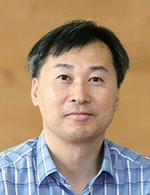 Professor Tae Sik Yoon
UNIST Graduate School of Semiconductor Materials and Devices Engineering
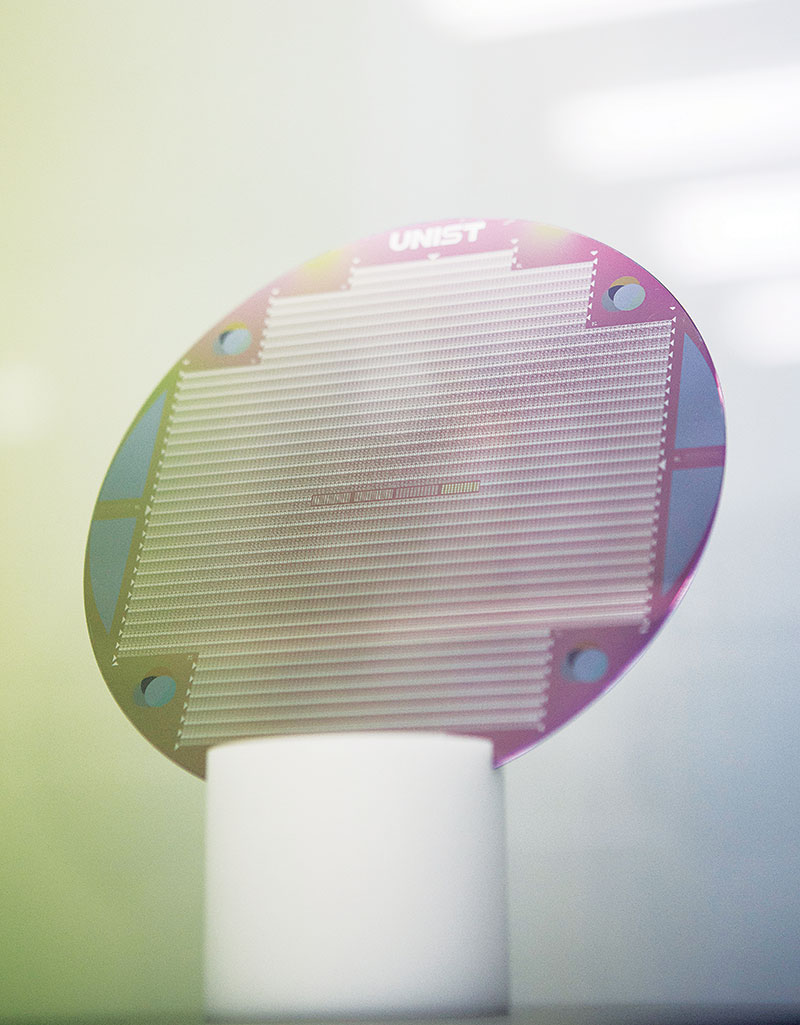
The highly competitive global semiconductor field
The semiconductor field accounts for more than 20% of total exports in South Korea, contributing to the national industry more than any other technological field. In particular, as semiconductor technology has been recognized as a national security and strategic technology in recent years, the competition in the semiconductor field has ramped up globally. In addition to the semiconductor competitive composition centered around advanced nations, newly emerging strong nations in semiconductors such as China, occupying about 60% of the global semiconductor market as a group, have risen as additional competitors. As the trade war between countries in relation to semiconductors has deepened, semiconductor technology has become a national strategic asset. Amid these domestic and international competition, it is paramount is to be at the forefront of technologies through cutting-edge research activities and securing world-class expert manpower who can implement those technologies to gain the edge in the semiconductor industry and technology to improve national competitiveness.
With the emergence of the Fourth Industrial Revolution era, a new technological revolution has occurred based on information and communication technology including AI, IoT, self-driving cars, edge computing, mobile smart devices, 6G telecommunication technology, etc. Semiconductor technology is the key to implementing such a technological revolution. In particular, the development of next-generation semiconductor technology is required such as AI semiconductors that can efficiently process a large volume of data to implement AI technology, whose use in every aspect of society including engineering, medicine, and the economy explosively increases. The global competition is ratcheting up to lead the market. Considering these internal and external competition and the urgency and continuity of semiconductor technology, it will be difficult to secure a solid foothold in the next-generation semiconductor technology and market using only existing conglomerate-based semiconductor technological development and manpower retraining. To overcome this, a measure to support the semiconductor field has been pursued jointly by the government, industrial, and academia sectors in recent years. For example, projects of next-generation semiconductor technology development (e.g. the next-generation intelligent semiconductor technology development project, PIM AI semiconductor technology development project, etc.) and measures to promote manpower in the semiconductor are proactively put into practice.
“We have the prerequisites”… to develop and produce talents specialized in semiconductors
UNIST Graduate School of Semiconductor Materials and Devices Engineering marked our first anniversary since our opening in August 2021. Since its founding, the school has recruited Masters and Ph.D. Candidates to perform academic and research activities specialized in semiconductors.
Semiconductor research is an interdisciplinary field, which involves many disciplines such as physics, chemistry, material engineering, chemical engineering, electronic engineering, mechanical engineering, and industrial engineering. It also requires various expertises in semiconductor materials, devices, processes, equipment, circuits, system design, etc. Due to these interdisciplinary characteristics, semiconductor-specialized education and research are individually distributed and performed over semiconductor-based departments at universities. Some of these departments and graduate schools in South Korea are mainly focused on the system semiconductor field to manage the curriculum.
However, the semiconductor field requires a comprehensive range of technologies to implement a total integrated device system by using many related technologies encompassing materials, devices, equipment, processes, packaging, etc. as mentioned above.
It is necessary to have academic and research activities specialized in the semiconductor field because we need to build and strengthen a semiconductor ecosystem including each of the above semiconductor-related technologies. The graduate school is founded and operated based on this viewpoint. It develops experts in semiconductor materials and devices, and creates new industries in related fields, while performing research activities in next-generation semiconductors to gain a competitive edge in the race for semiconductor technology development.
The main goals of the Graduate School of Semiconductor Materials and Devices Engineering are summarized as follows: ▲ Developing world-class researchers specialized in semiconductors, ▲ researching and developing next-generation semiconductor source technology, and ▲ contributing to building a joint industry-academia alliance system and strengthening the semiconductor industry ecosystem through capitalizing on this system. The core philosophy of manpower development at the Graduate School of Semiconductor Materials and Devices Engineering is to produce leaders in the semiconductor field through semiconductor-specialized academic and research activities, semiconductor-specialized experts, researchers in semiconductor materials and devices, innovative pioneers in semiconductors, and manpower equipped with global networking and collaboration capability based on interdisciplinary competencies in the semiconductor field.
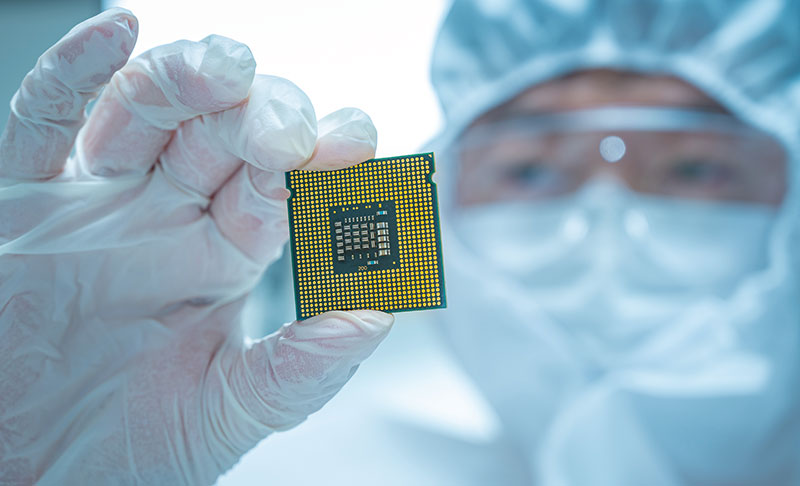
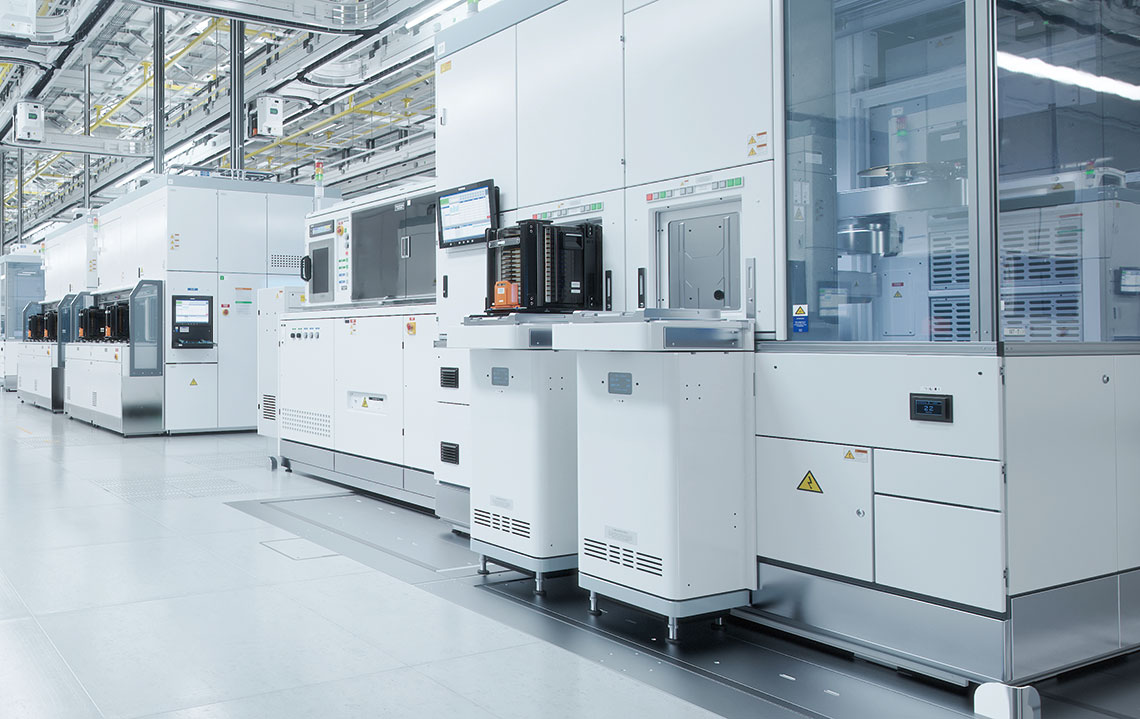
UNIST
Central
Research
Facilities
Aiming to develop and produce “hands-on experts” who connect research with field expertise
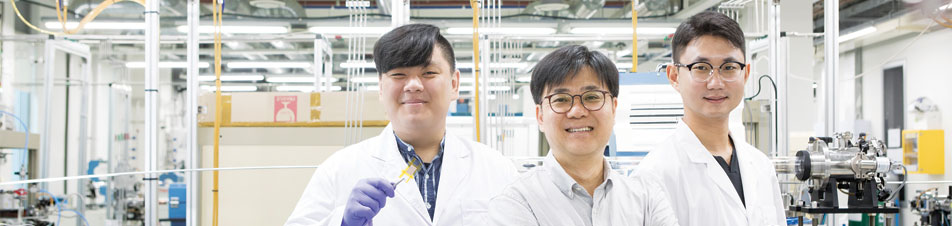
Our Graduate School provides an organic fusion curriculum of materials, devices, processes, and analysis technologies to develop key manpower in semiconductor materials and devices. The curriculum encompasses a whole range of engineering courses including semiconductor materials, devices, and processes, which are different from existing standalone department-based curriculum, considering the interdisciplinary characteristic. In particular, we selected semiconductors, displays, and analysis technology as the three key academic subjects to develop specialized experts. In addition, we provide an opportunity for our students to avail of semiconductor working process education from researchers active in the field at large semiconductor companies, as well as experimental and hands-on education, etc. related to manufacturing semiconductor devices. This is aimed to advance research manpower equipped with hands-on capabilities. We have built an academic and research environment to develop talents who can develop a source technology of advanced future semiconductors through our “interdisciplinary-geared fusion curriculum centered on the graduate school.”
The research on semiconductor materials and devices is not limited to the production of devices using the material and process technology and the evaluation of electrical properties. What’s more, it requires various analysis capabilities such as the structure, composition, physical properties, and bonding state of materials and devices using advanced inspection and analysis infrastructure. Our graduate school provides experimental and hands-on courses to manufacture and analyze new devices based on new materials by leveraging the cutting-edge infrastructure at the UNIST UCRF, which is a nano-fabrication and analysis support center under UNIST. Postgraduate students are also conducting source research centered on the national research tasks as well as useful joint industry-university research that leads the source technology into industrial fields as they participate in joint industry-university research projects. We are developing hands-on R&D specialized leaders equipped with academic literacy and creativity to lead the future local semiconductor industry through academic and research activities specialized in highly advanced semiconductors.
Useful joint industry-university research that leads the source technology into industrial fields is also conducted as we participate in joint industry-university research projects.
We are developing hands-on R&D-specialized leaders equipped with academic literacy and creativity to lead the future local semiconductor industry through the academic and research activities specialized in highly advanced semiconductors.
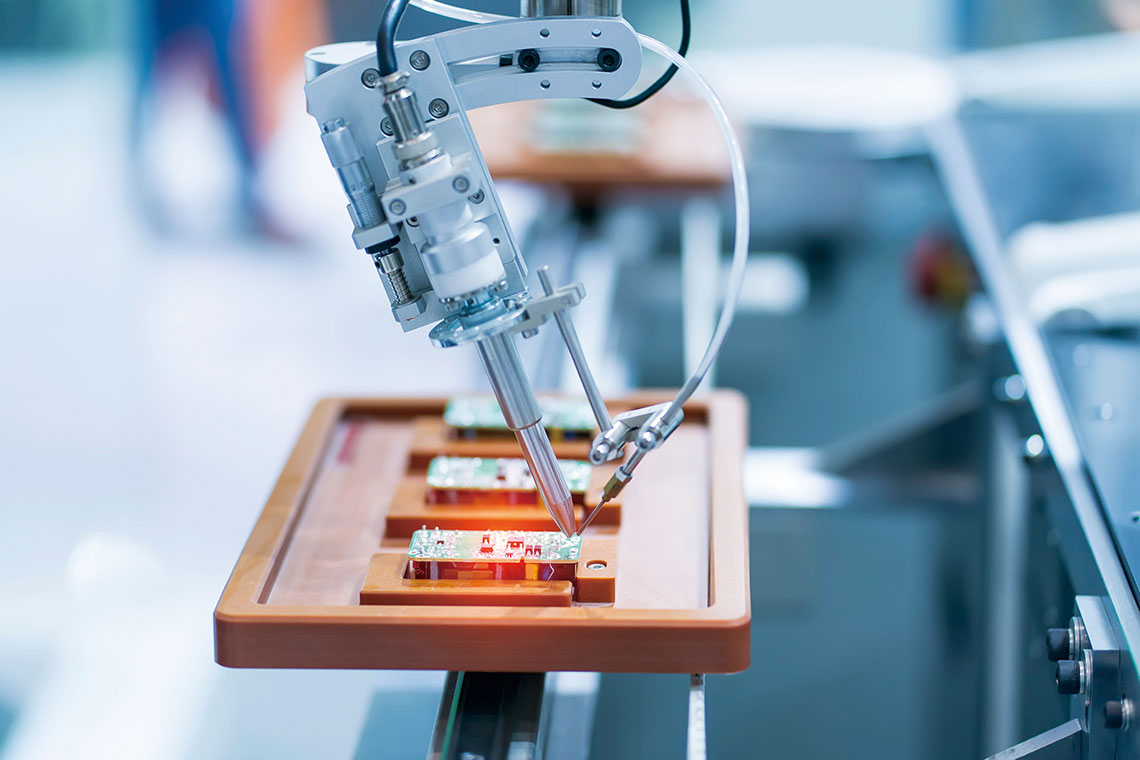
Next-generation semiconductor technology? It changes everything from devices and processes to materials.
The next-generation semiconductor technology must be developed to have ongoing growth in the semiconductor industry. However, the development of semiconductors, which has been continued until now, is now facing technical limitations. For example, existing semiconductor technology has achieved performance improvements and increase in chip densities by steadily reducing the device scale based on Moore's law. However, as the device scale has gotten too small now, it is difficult to improve performance using current methods. Thus, the GAA complementary metal-oxide-semiconductor (CMOS) architecture has been developed to improve devices’ performance. As such, the device structure and layout have become more complex. This means that the difficulty level of the process technology has become higher now. That is, the development of various next-generation process technologies such as ultra-fine patterning through lithography and etching processes, ultra-fine thin film deposition, precise control of dopant distribution, heat treatment, wiring technology, and packaging is becoming critical. Not only device structures and processes but also semiconductor materials should be changed to solve this technical difficulty. In contrast with fabricating devices using traditional semiconductor materials based on silicons previously, the situation has changed now that desired properties can be obtained only by using 2D materials and a variety of new materials such as various low and high dielectric constant oxide films, transition metal nitride films, gallium oxide films, silicon carbide, and compound semiconductors.
From a technical standpoint, it means that research on new materials and processes is warranted, marking a paradigm shift from the existing technical development of semiconductors toward next-generation semiconductors based on new devices using these new materials and processes. In particular, AI semiconductor technology has been actively developed in recent years. This is because the problems caused by the performance degradation and high energy consumption have become critical due to the data transmission delay between operation and memory devices, which is called the Von Neumann bottleneck when processing a large volume of data in architecture where the operation and memory devices are separated in the Von Neumann architecture, which is the existing computing system architecture. Thus, studies on new devices optimized for AI applications and new materials for new devices are absolutely demanded beyond the development of existing CMOS-based central processing units, graphics processing units, and memory devices.
Faculty members consisting of experts in every field of highly advanced semiconductors
The faculty of our Graduate School is composed of professors expertized in semiconductor, display, and analysis technology to study highly advanced semiconductors. Here is a brief introduction of their research fields encompassing semiconductor and display materials, processes, devices, and analysis. As AI semiconductor research, phase change and oxide resistance change-based neuron and synaptic devices and AI applications using the same; high-density non-volatile memory and memristor computing devices; 2D chalcogenide compound semiconductor materials and devices; spin charge change-based non-volatile memory; logic and neuromorphic devices; graphene and MXene materials and devices; III-V based compound semiconductors; CMOS logic and ferroelectric-based new concept nonvolatile memory devices; quantum conduction and quantum information devices, 2D layered semiconductors and thermoelectric materials; amorphous boron nitride-based low-k dielectric thin film, soluble semiconductor materials, smart polymers and programmable materials, and flexible semiconductors and display devices using them; high-resolution display materials/ processes/ devices using semiconductor quantum dots and nanomaterials; multidimensional semiconductor materials, high-performance sensors and energy generation devices using the same; ultra-fine /ultra-precision devices through monoatomic control; photoresist materials for next-generation EUVs; carbon nanomaterials and perovskite materials and electronic and energy devices using them; conjugated polymer/small molecular semiconductor material and organic electronic device using the same; nano-optical technology; analysis of electronic properties of low-dimensional materials; analysis of semiconductor interfaces and properties using radiation and electron microscopy; and analysis of semiconductor composition and properties using mass spectrometry.
In addition, we have launched the “Semiconductor Innovation Leading Research Division” where the Graduate School of Semiconductor Materials and Devices Engineering, UCRF, Department of Electrical Engineering, System Semiconductor Engineering Division, and the AI Graduate School participate in support of the Ministry of Science and Technology Information and Communication. In this Division, we have performed research on next-generation materials and devices of AI semiconductors by combining semiconductor new materials and devices with system design and software technology.