- ZOOM IN
- UNIST Competitiveness
본문영역
UNIST was founded 13 years ago
and ranked within the top-100 universities
and 11th in the world in the number of citations per faculty
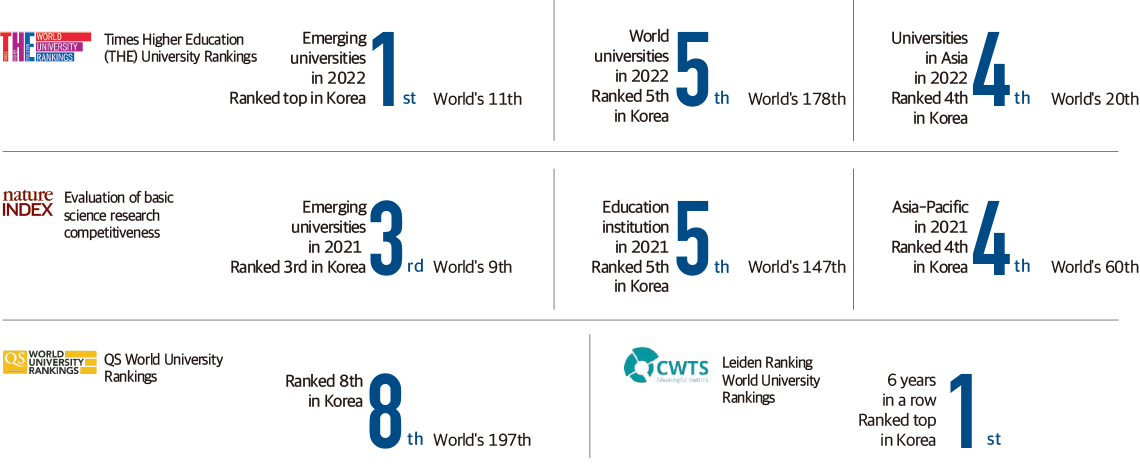
UNIST has entered the top-100 universities in the QS World University Rankings 2023. UNIST has ranked 197th, which is up 15 spots from the previous year when it first participated in the QS rankings. Among the evaluation indexes, the number of citations per faculty ranked 11th in the world and 2nd in Korea.and ranked within the top-100 universities
and 11th in the world in the number of citations per faculty
UNIST is just founded 13 years ago, but its world-class research competitiveness is the engine of improving rankings.
World University Rankings
 8 Most Influential 1% Researchers in the Worldresearchers
-
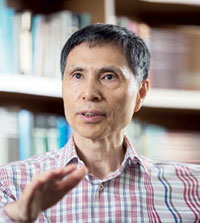
Professor
Kwangsoo Kim
CROSSFIELD -
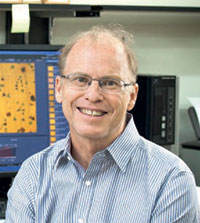
Professor
Rodney S. Ruoff
CHEMICAL/MATERIAL SCIENCE -
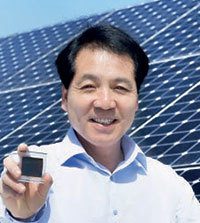
Professor
Sangil Seok
CROSSFIELD -
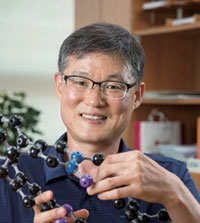
Professor
Jongbum Beak
CROSSFIELD -
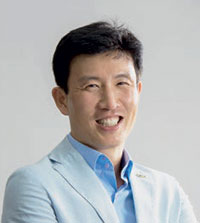
Professor
Jaepil Cho
MATERIAL SCIENCE -

Professor
Hyunwook Lee
CROSSFIELD -
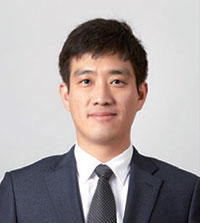
Professor
Seungwoo Cho
CROSSFIELD
-
World-class research competitiveness
starts from high-quality papers.
-
UNIST has published 22 papers in three global academic/ trade journals: Nature, Science, and Cell for the last two years. The number of papers produced by UNIST in 2021 tallied 1,511, of which 1,409 papers were published in Science Citation Index journals. That is, 93.25% of the total papers were published in journals that evaluated their scientific value as high. Among them, the ratio published in the top 7% of journals is as many as 28.2%. This means a third of the papers produced at UNIST are published in the top academia-recognized journals. In particular, the papers published in the top 7% of journals have 8.3 citations per paper on average, which are highly influential in various research fields.
The number of citations per paper in the recent 10 years is ranked first among universities in Korea. The average number of citations per paper produced from 2011 to 2022 tallied 28.05. For reference, the number of citations per paper is an index that indicates a real research value, which has been widely used to evaluate the research competency and disseminate impacts.
-
University growth led by
top researchers and optimized research support
-
The key to the research competitiveness of UNIST can be found in the top researchers and research support. UNIST has made an effort to bring researchers whose growth potential and vision are first-rate under the our mantra of “the university level is determined by the faculty level” from its founding. We have seven to eight of our researchers named to the list of the world's most highly cited researchers (HCR), which Clarivate selects and publishes every year for the top 1% of researchers in each field. In 2021, eight professors, namely Kwang Soo Kim, Rodney S. Ruoff (in two fields), Jong-Beom Baek, Sang Il Seok, Hyun Wook Lee, Seung Woo Cho, and Jaephil Cho were selected for the HCR. In addition, qualitative evaluations were conducted based on the research influence when assessing each professor, thus motivating excellent paper production and academic impact.
UCRF, which has made headway with the founding of UNIST in 2009, is also one of the big pillars in the research competitiveness of UNIST. In UCRF, around 300 pieces of cutting-edge equipment are set up with a budget of KRW 80 billion. They are shared by UNIST researchers and maintained by 60 specialized operating personnel. The environment, in which the best equipment is run and supported by master's and Ph.D. degree holders, has led to excellent research performance.
-
Challenge as the “first mover”
who leads technology innovation
-
UNIST is committed to charting the way in the technology innovation-related fields marked by rapid change. Particularly, UNIST has focused on AI and semiconductor fields, which are pivotal to the Fourth Industrial Revolution, bio-medical field, which is chosen as a new growth engine, and carbon neutral field, which copes with the climate crisis.
The UNIST Augmenting Intelligence Graduate School, which was opened in September 2021 for the first time in the southeastern region of Korea, and the Graduate School of Semiconductor Materials and Devices Engineering, which was opened in September 2021, are changing the regional industry sites in recently heralded AI and semiconductor areas. The Carbon Neutrality Graduate School, which will admit new students from September 2022, will play a leading role in education and research in the carbon neutrality field in response to climate change, which has been a global topic. We also strive to promote the UNIST HST school, which will be open in September 2023, to develop physician-scientists, who will lead the bio-medical field as a promising future industry, and advance the medical industry.