- PEOPLE 2
- Staying in Korea and realizing dreams at UNIST
본문영역
Rabi Sale Ibraham,
government-sponsored scholarship student from Nigeria
at the Department of Materials Science and Engineering
In 2019, Rabi Sale Ibraham was chosen as a recipient of the Global Korea Scholarship, which is the scholarship project for Korean government-sponsored foreigners.
Once selected as a GKS recipient, she will choose a university to enroll in an undergraduate or graduate course. The university she chose was UNIST, while GKS recipients normally return back to their mother country after completing an undergraduate course.
But, Rabi's choice was different. She wanted to stay at UNIST and learn more about material science and engineering.
We met her and listened to her about Korea and her major.

A Nigerian student who loves Korea
“I love everything about Korean culture. Last spring, I went back to Nigeria after a long time and I found myself missing Korea even in Nigeria. Whenever my friends saw me enjoying spicy foods, they said I was so Korean.”
There are so many charming Southern folk songs on the playlist of her mobile phone because she loves Korean traditional folk songs besides Korean foods.
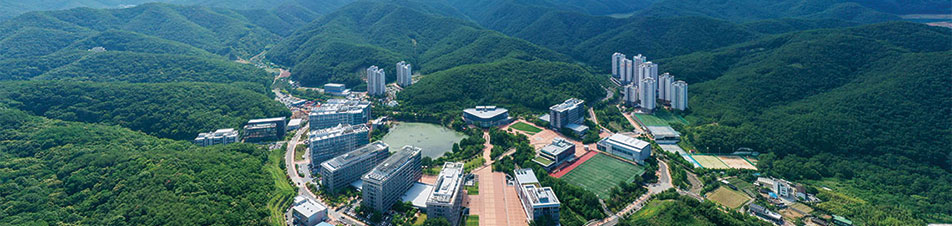
Traditional Korean folk music is completely different from Nigerian music but she felt profound sadness when she heard the kayagum and Arirang being playing for the first time. Since then, she has fallen in love with traditional Korean folk songs that are deeply related to her. Now, traditional Korean folk songs are her favorites while walking around Gamak Pond, her favorite place on campus.
“When I first came to Korea, I could say a few numbers and greetings. I learned Korean for a year in the Language Education Department, and I felt that the language is truly profound and really difficult to learn. In fact, I had a lot of trouble because of my basic Korean ability when I studied my major-related courses. But now, I want to learn more about the Korean language which embodies humane and rich emotion.”
Many international students in Korea wanted to continue their studies but gave up in the middle of their studies with a lot of difficulties. One of the reasons is that the Korean language is difficult to learn. Fortunately, all lectures at UNIST are conducted in English, making it easier for international students to study. One of the reasons for her to continue her studies in the postgraduate school was the environment of the global UNIST campus. In particular, Professor Chaenyung Cha in the Department of Materials Science and Engineering, who is her supervisor, and classmates in her lab affected her decision positively. Whenever I felt difficulties and limits during my studies, Professor Cha gave me encouragement and hope. Because of that, she had no doubt to enroll in a postgraduate course here at UNIST.
“UNIST has been a valuable space for her who is interested in various materials that are
commonly found in our daily life to realize her dreams and meet a broader world than
she knew before.”
Fascinated by the creative and challenging field of material science and engineering
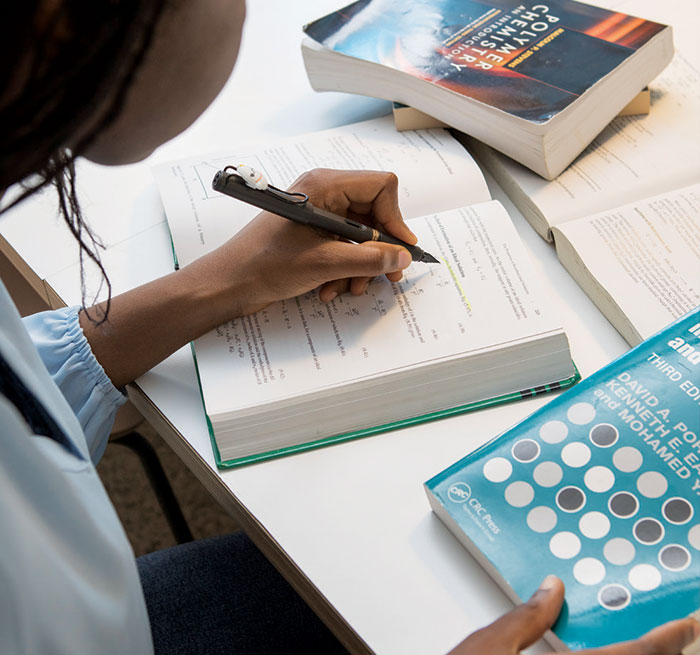
To the question of why she chose material science and engineering among other majors, she answered that material science and engineering is a discipline with “demonstrableness and passion.” “Everything we see is made of materials and I was really interested in the basic understanding of various materials and the process to understand the structure. Through this process, I felt like a magician when I developed and processed new materials.”
She introduced herself as being initiative-taking. She said material science and engineering were well-suited to her character as it requires creative and challenge-minded talents. She also said that doing the research is very rewarding because new technology comes from newly developed material, which expand the basis of the industry.
UNIST has been a valuable space for her as she is interested in various materials that are frequently found in our daily life to realize her dreams and meet a broader world than the one she knew before. Rabi sacrificed her precious summer vacation to go to graduate school when she was set to graduate in August 2022. We wish her well in her career and professional growth as a leader in the future industry.

What is Global Korea Scholarship (GKS)?
It is a scholarship program for foreigners hosted by the National Institute for International Education (NIIED) under the Ministry of Education. It aims to promote international academic exchange and goodwill between nations by providing international students with an opportunity to study at a university or academic institution in Korea.
Only a small number of talented students is chosen by each country for the scholarship and they will study undergraduate or postgraduate courses at universities.
UNIST has been selected as one of the available universities for GKS since its founding in 2009. In particular, UNIST received the “top-performing” certification in the “Education Globalization Competence” assessment under the Ministry of Education in 2021, along with a merit point when being selected in the list of available GKS universities in 2023.