- ISSUE
- “Health Science and Technology School at UNIST” that leads the biohealth industry to germinate
본문영역
“Ulsan Medical Complex Town”
expected to be a heartland of bio-medial research and startup
UNIST aims to develop the new wave of physician-scientists who lead the biomedical field.
We will produce world-class physician-scientists through the “UNIST Health Science and Technology School” which will be established next March, and spur biomedical research.
This is the reason why the medical and bio field, which is one of the future industries, is fixated on this
Ulsan-based industry.
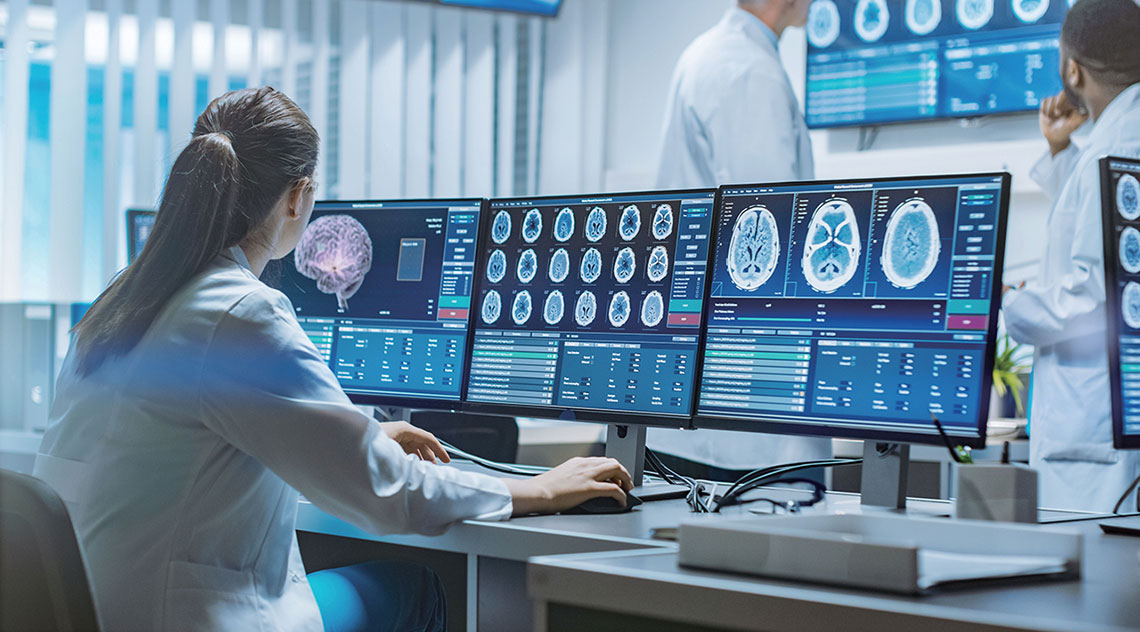
“Korean-type HST program.”.. Running Korea's first bachelor’s degree course of the
Health Science and Technology Program.
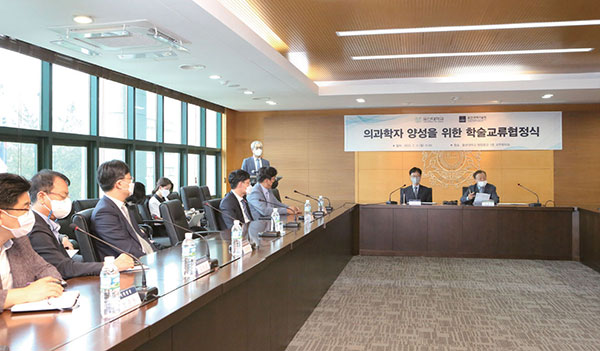
On July 11 (Monday), UNIST signed a memorandum of understanding on the academic exchange between the University of Ulsan and UNIST
with the University of Ulsan to develop emerging physician-scientists. The main agreement is to jointly operate the “UNIST-University of Ulsan
College of Medicine HST Program” for the development of physician-scientists.
The Health Science and Technology (HST) Program is an interdisciplinary-joint endeavor between Harvard University, Harvard Medical School, and MIT. It has produced first-rate talents who lead research and development in the bio and medical field through the collaboration of medical
and engineering schools and hospitals. Moderna, which has developed a COVID-19 vaccine, was also founded based on the Harvard-MIT HST
program when the world was in turmoil due to the COVID-19 pandemic.
The UNIST-University of Ulsan College of Medicine’s HST program is similar to the MIT-Harvard Medical School’s one in that the college of
engineering and medical schools collaborate and Asan Medical Center in Seoul provides infrastructure. The uniqueness of the program is that the
courses start from the undergraduate level. Owing to this, a whole lifecycle of the HST academic program encompassing pre-/ major medical courses and the graduate school can be provided. In particular, it is noteworthy to see the HST program model learning from the undergraduate pre-medical (pre-med) course, which is a first-ever endeavor in Korea. While freshmen in the pre-med course meet the HST academic program, the foundation to develop competencies as physician-scientists will be prepared according to their aptitude and academic merits.
The UNIST-University of Ulsan College of Medicine
HST program is an “engineering-based HST School” where medical, science and engineering curricula are organically combined. I expect UNIST students who dream of being scientists or engineers will experience medical fields and conduct practical research and technology development required for the cutting-edge bio and medical fields.
Dean Jae-Young Sim at the College of Information-Bio Convergence Engineering

Producing first-rate physicians with expertise in AI and world-class engineers with clinical knowledge
This program is largely divided into two tracks, namely the medical doctor HST track for major fundamental courses targeting undergraduate, Master’s, and Ph.D. students at the University of Ulsan College of Medicine and the Medical Engineering HST track for clinical-oriented education such as anatomy targeting UNIST undergraduate students.
A short-term Master's degree course will also be provided, through which students at the University of Ulsan College of Medicine who complete this course will become physician-scientist. It will allow for a fast track to becoming a physician-scientist for medical students who are interested in science and engineering in their undergraduate courses. In addition, customized academic courses are also available for those who hold bachelor's, Masters, or Ph.D. degrees or medical licenses. UNIST students will be retrained into highly skilled physician-scientists who can do basic science research and commercialization at the same time through real-world practice in the field using the medical center's infrastructure.
To do this, the UNIST HST School will establish an “engineering-based physician-scientist” academic model with 10 majors in engineering and
natural science fields integrated. More emphasis will be placed on engineering subjects, including AI such as medical AI, genome AI, and regenerative rehabilitation engineering. The importance of smart healthcare where the medical industry and ICT technology, such as AI, big data, and the Internet of things (IoT) are converged continues to ramp up. In line with this, we are focusing our resources and competencies on developing world-class physician-scientists.
“It will contribute to developing physician-scientist who lead the biomedical field,
which is one of the promising industries in the future, and nurturing medical industries targeting the southeast region of Korea. Like Kendall Square* in Boston which leads the biomedical industry in the U.S., the medical complex town is built in Ulsan and the ultimate vision of vibrant education, research, and startups in the biomedical field will become a reality with the UNIST HST School charting the way.”
President Yong Hoon Lee

The HST is an interdisciplinary-joint health science and technology program between Harvard Medical School and MIT since the 1970s.
It develops and produces physician-scientists who lead research and development in the biomedical field in cooperation with medical and engineering schools and hospitals. Based on the philosophy “From the chair in the research laboratory to the beds of patients”, it launches academic education and research where science and technology are employed in the improvement of human health (i.e. prevention, diagnosis, treatment, etc.)
Students who participate in the HST program can take all lectures at MIT and Harvard University, as well as participate in joint research with the world's renowned university hospitals. It is significant in that new biomedical technology is produced by combining MIT's technicality and clinical trial know-how at the Harvard Medical School. The Harvard-MIT HST program also played a key contributing role in the founding of Moderna, which has become a world-renowned company due to the development of its COVID-19 vaccine
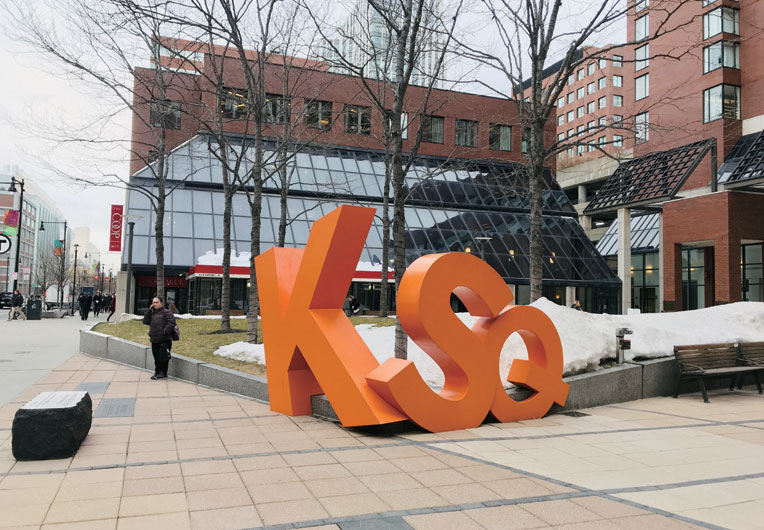
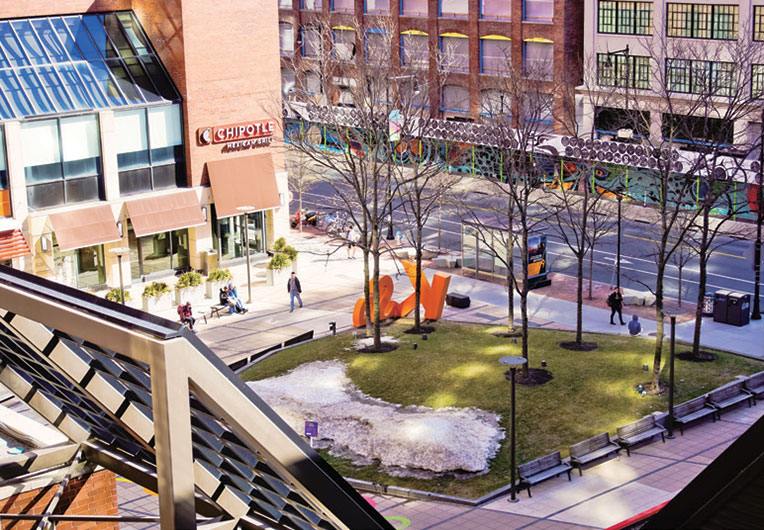
* Silicon Valley in the biotech industry, ‘Kendall Square’
“The most innovative square mile on the planet” This is the caption printed on the symbol at the entrance to Kendal Square. In a square mile, more than 1,000 biotech companies, laboratories, hospitals, and universities are located to lead biotechnology globally.
Kendall Square flourished as the Cambridge city council in the U.S. legalized recombinant DNA experiments in 1977.
Genetic manipulation experiments, which were prohibited by law, were legalized with the efforts of professors in the Department of Biology at Harvard University. Next year, scientists who graduated from MIT and Harvard University founded Biogen, and then the foundation of the bio and pharmaceutical industry was established in Boston. Since then, Kendall Square has steadily grown, with employment in the bio and pharmaceutical industry having increased by 92% over 15 years from 2005 to 2020. As the research and development facilities increased, residential spaces or university buildings were also organically built, transforming the place into a high-tech district where many people of all backgrounds assemble.
Kendall Square is now widely recognized as a place for starting up bio ventures with research achievements by research-oriented universities and influencing innovative technologies. Not only MIT and Harvard University, but also leading global bio companies such as Pfizer, Novartis, and Merck are established in this area. Many startup companies are also founded as research personnel and investors form connections.
UNIST aspires to create an innovation space like Kendall Square in Ulsan with the founding of the HST School. The university envisions developing physician-scientists in cooperation with the University of Ulsan College of Medicine, supported by the launch of many startup companies based on their own research and development, as well as forming robust networks and infrastructure geared to the biomedical field.